






- 96 Views
- 8 Min Read
- (9) Comments
The First Question Every Visitor Asks in Hanoi
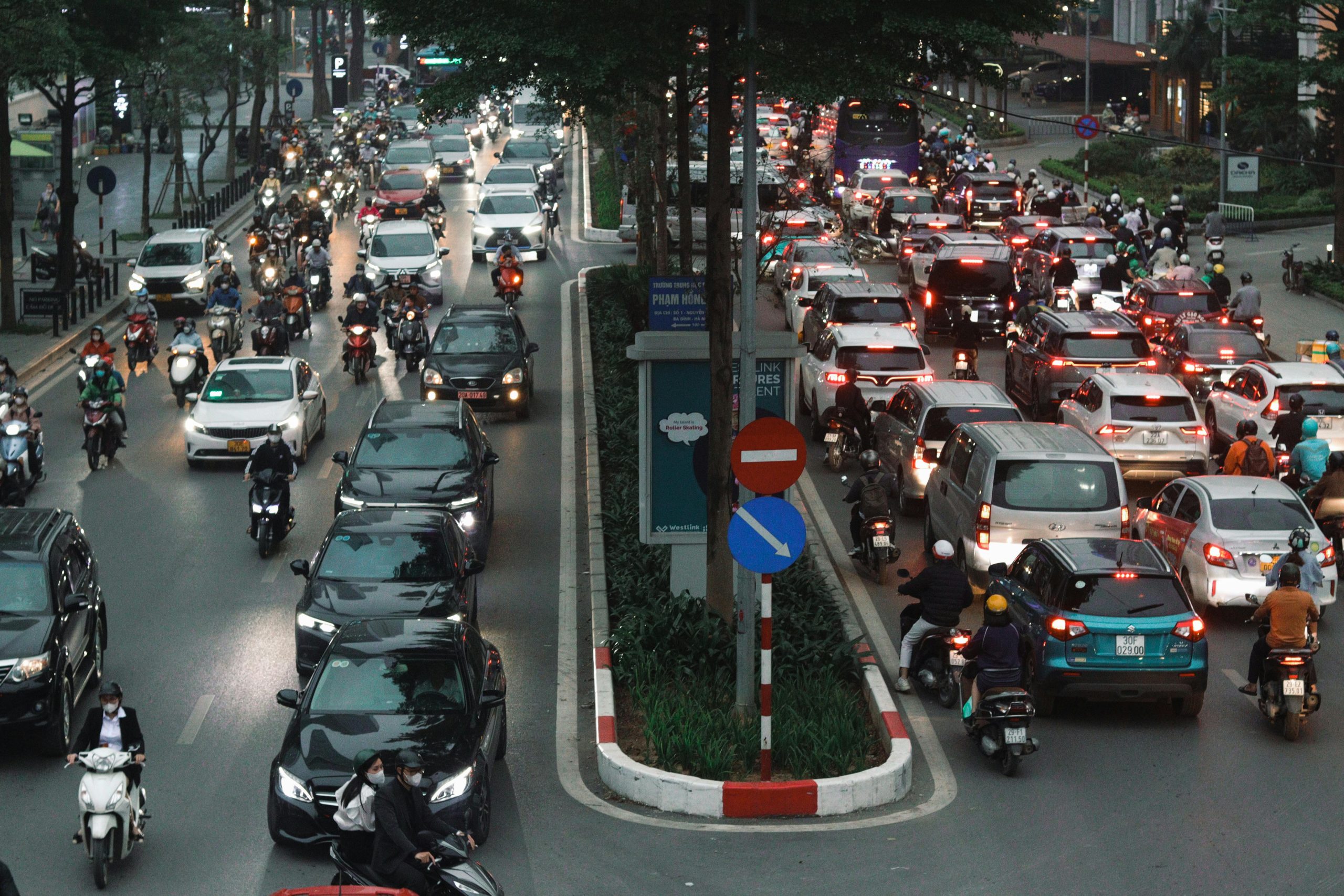
You land at Noi Bai Airport, step outside, and immediately notice it.
Motorbikes everywhere.
Flowing through intersections, weaving between pedestrians, moving in every direction at once. Before you have even reached your hotel, Hanoi’s streets already feel like a different world.
And naturally, the question arrives almost immediately:
How exactly am I supposed to get around this city?
The good news is that Hanoi is actually one of the more manageable cities in Southeast Asia — once you understand how each transport option works and when to use it.
This guide covers everything honestly, from walking the Old Quarter to riding through hidden backstreets on a vintage Minsk motorbike.
Walking: The Best Way to Explore Hanoi’s Old Quarter
For most visitors, the Old Quarter is where Hanoi begins.
And inside the Old Quarter, walking is almost always the right choice.
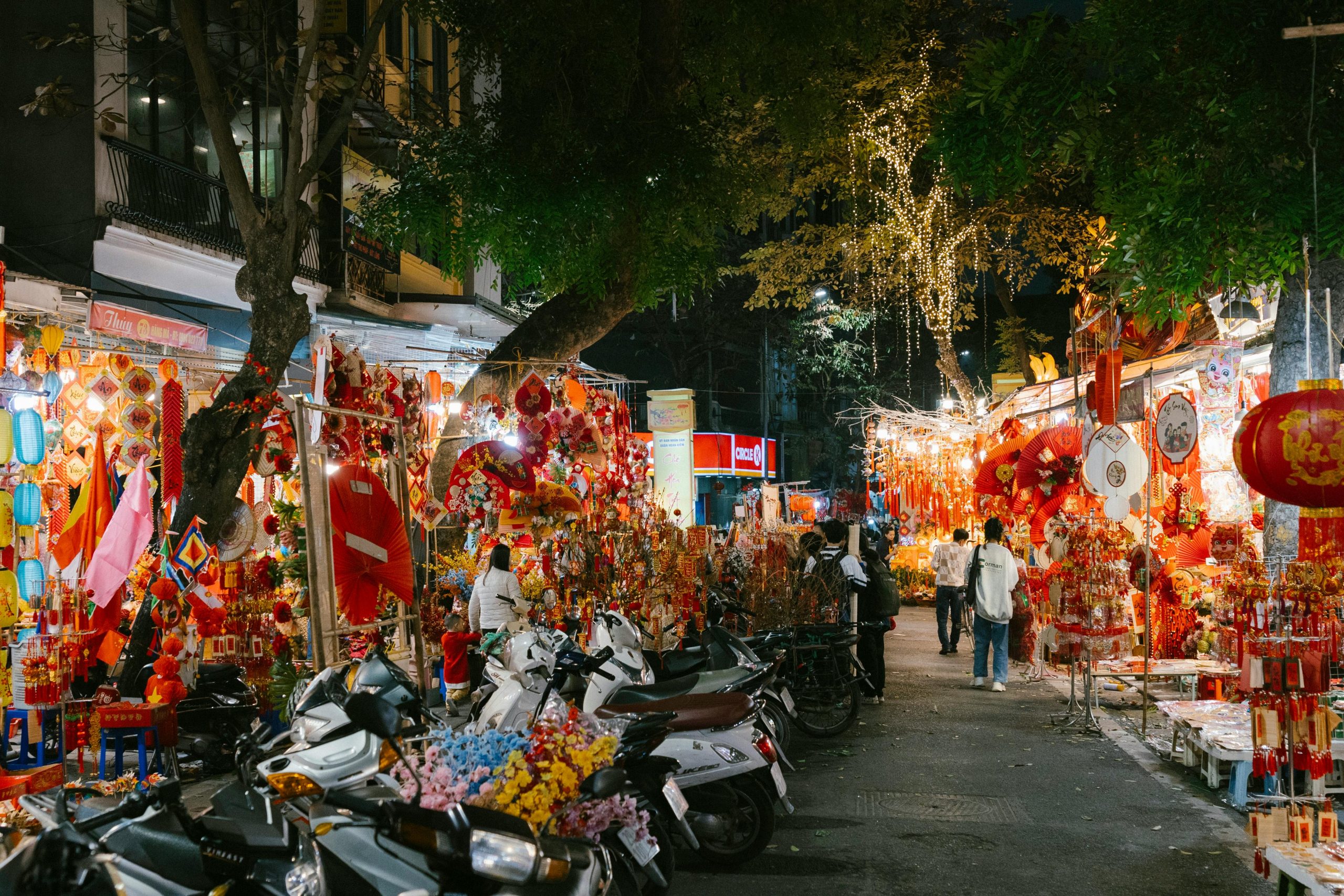
The historic 36 Streets area — centered around Hang Gai, Hang Bac, Ma May, and Ta Hien — is compact enough to cover entirely on foot. Hoan Kiem Lake sits at the southern edge and makes a natural landmark for orientation. Most hotels, restaurants, and attractions are within a comfortable 15 to 20-minute walk of each other.
Walking works best for:
- Exploring the 36 Streets and Hoan Kiem Lake area
- Discovering hidden alleyways and local cafés
- Street food hunting at your own pace
- Early morning and late evening when traffic is lighter
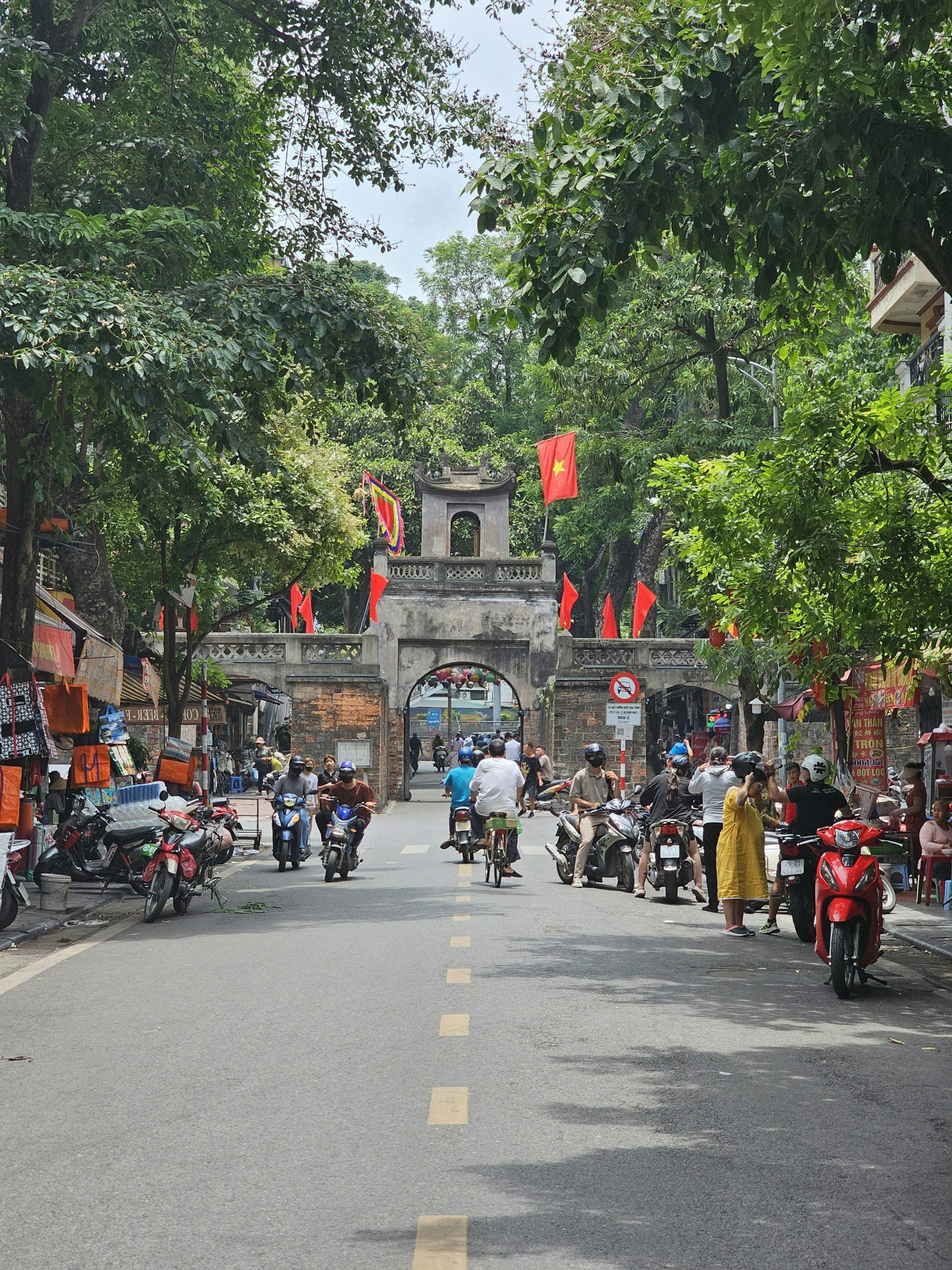
The honest challenge: Crossing busy intersections takes adjustment. Hanoi traffic does not stop for pedestrians the way traffic does in Western cities. The local technique is to move steadily and predictably — not rushing, not hesitating — and let motorbikes flow around you naturally. It feels counterintuitive at first, but most visitors adapt quickly.
Once you find your rhythm, walking through Hanoi’s Old Quarter becomes one of the genuine pleasures of the trip.
Grab: The Most Practical Option for Getting Across the City
For anything beyond a comfortable walking distance, Grab is the most reliable choice for tourists.
Grab works identically to Uber — you set your pickup, choose your vehicle type, and the price is fixed before you confirm. No haggling, no language barrier, no risk of being overcharged.
Three main Grab options in Hanoi:
GrabBike — the fastest way through traffic. You ride as a passenger on the back of a motorbike. Short trips across the Old Quarter typically cost between 15,000 and 40,000 VND (roughly $0.60 to $1.60 USD). Fast, affordable, and surprisingly smooth once you get used to it.
GrabCar — more comfortable for longer distances, luggage, or traveling with a group. Useful for airport transfers or day trips to areas like West Lake or the Ho Chi Minh Mausoleum complex.
GrabTaxi — metered taxi booked through the app. Slightly more expensive but fully transparent on pricing.
Tip: Download Grab before you land at Noi Bai Airport. You will use it from the moment you arrive.
Public Buses: Cheap, But Not Built for Tourists
Hanoi has an extensive bus network that covers most of the city at very affordable prices — tickets cost between 8,000 and 15,000 VND depending on the route.
The honest reality, however, is that public buses are not particularly tourist-friendly. Signage is in Vietnamese only, routes can be confusing for first-time visitors, and buses can get crowded during peak hours. Without Vietnamese language skills or prior research, navigating the system takes real effort.
That said, adventurous travelers willing to figure it out often find it one of the most authentic local experiences Hanoi offers.
Public buses work best for: budget travelers, longer routes beyond the Old Quarter, travelers who enjoy local-style transport.
The Hanoi Metro: Limited but Growing
Hanoi’s metro system is still developing in 2026. The Cat Linh–Ha Dong elevated line operates primarily through residential areas rather than tourist districts, with single-journey tickets ranging from 8,000 to 15,000 VND.
For most tourists staying in or near the Old Quarter, the metro will rarely be necessary. But as the network expands, it will become increasingly useful for reaching outer districts efficiently.
Motorbike Tours: The Way Hanoi Was Meant to Be Experienced
Here is where transport becomes something more.
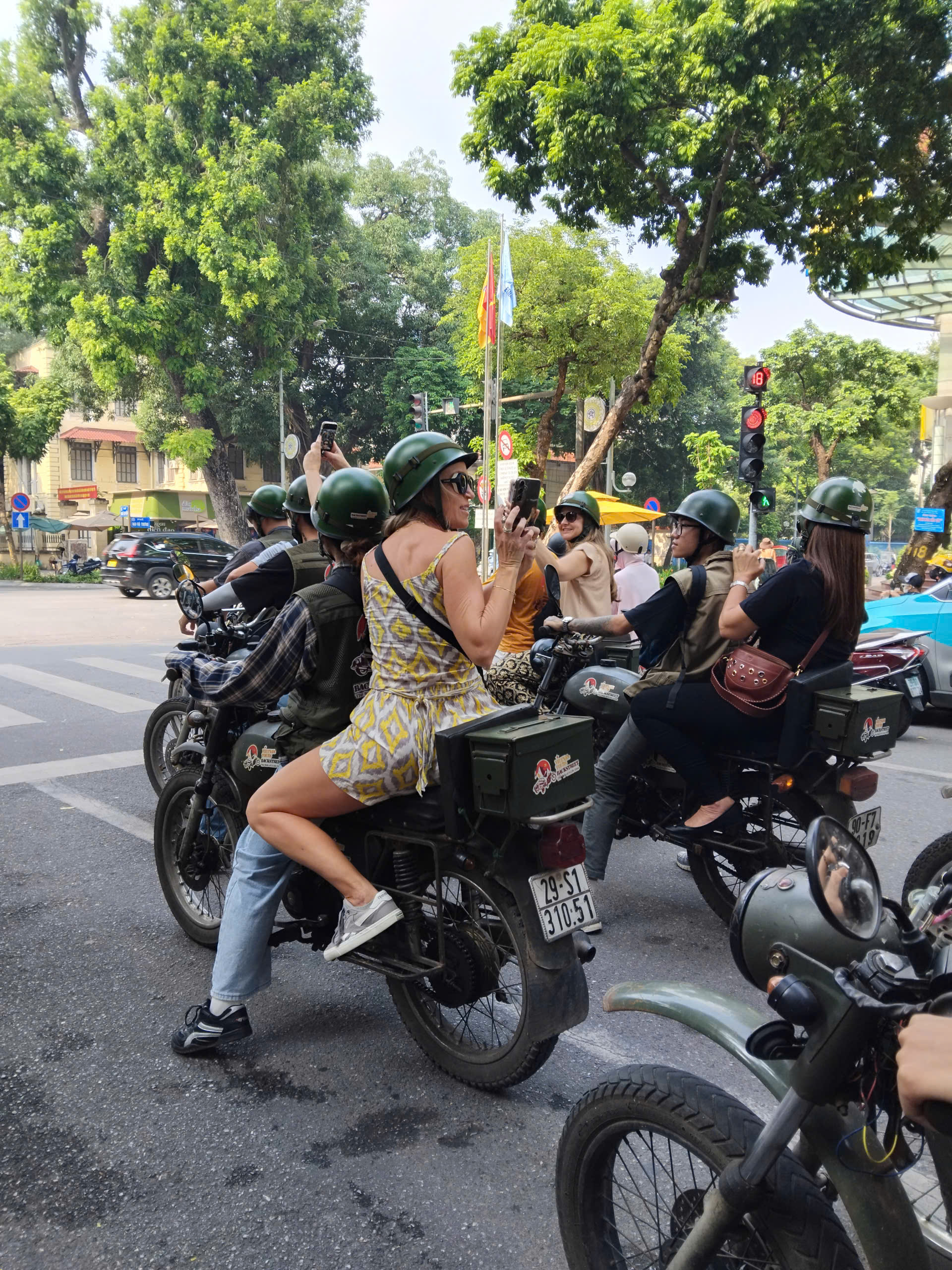
A Hanoi motorbike tour is not simply a way to move between locations. It is a way to experience the city at the exact level where it actually lives — close to the streets, close to the people, close to everything happening around you.
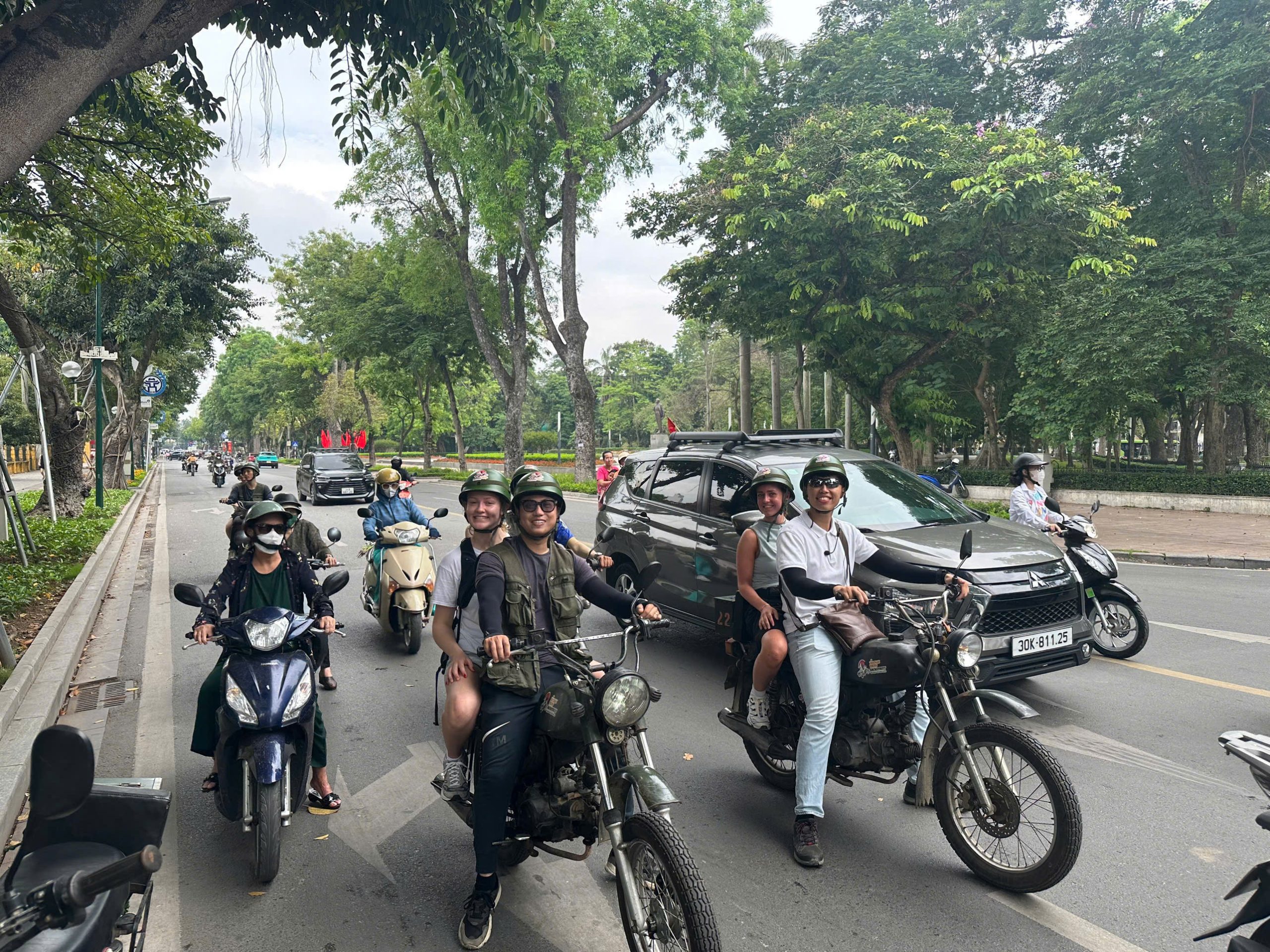
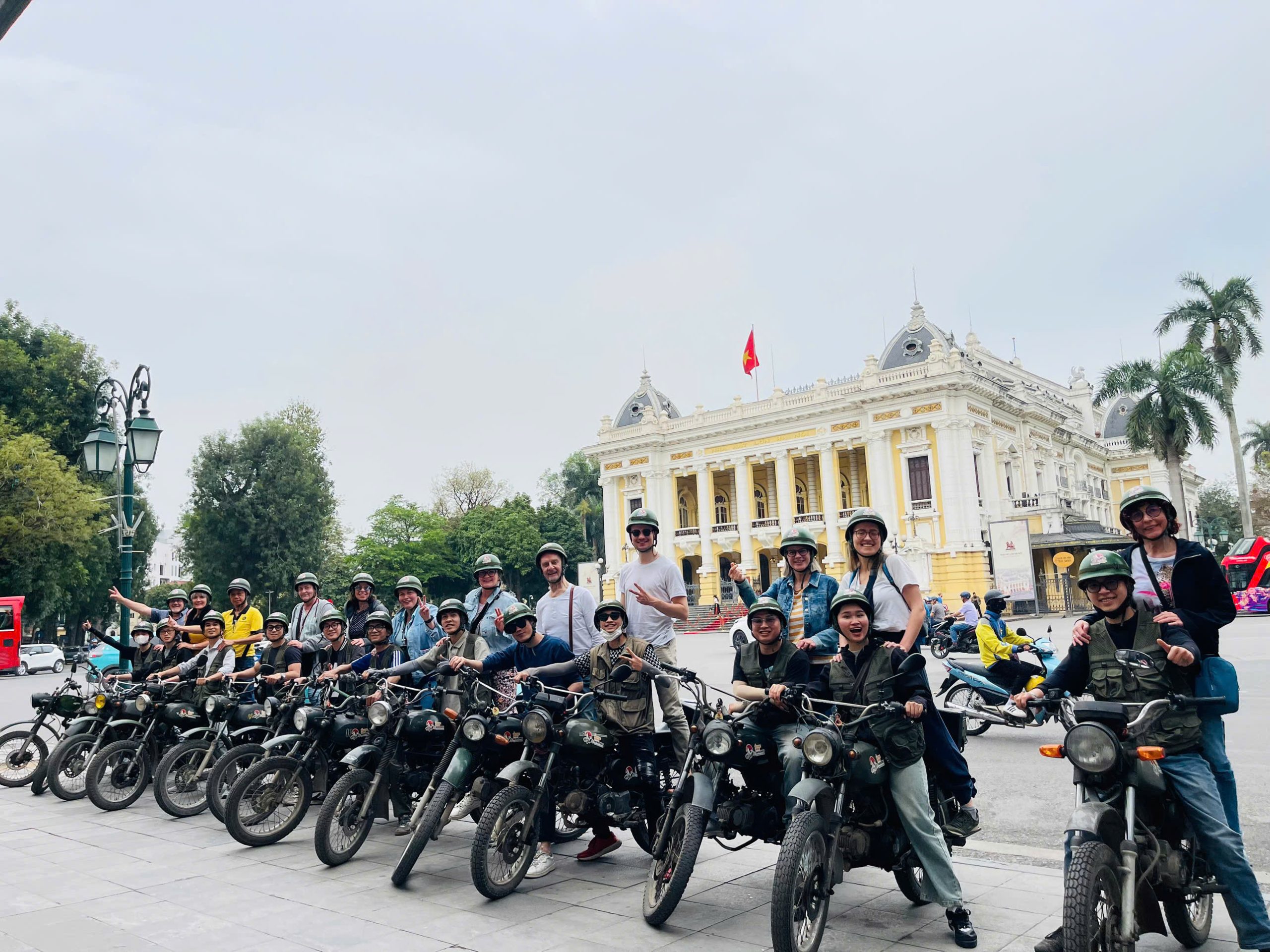
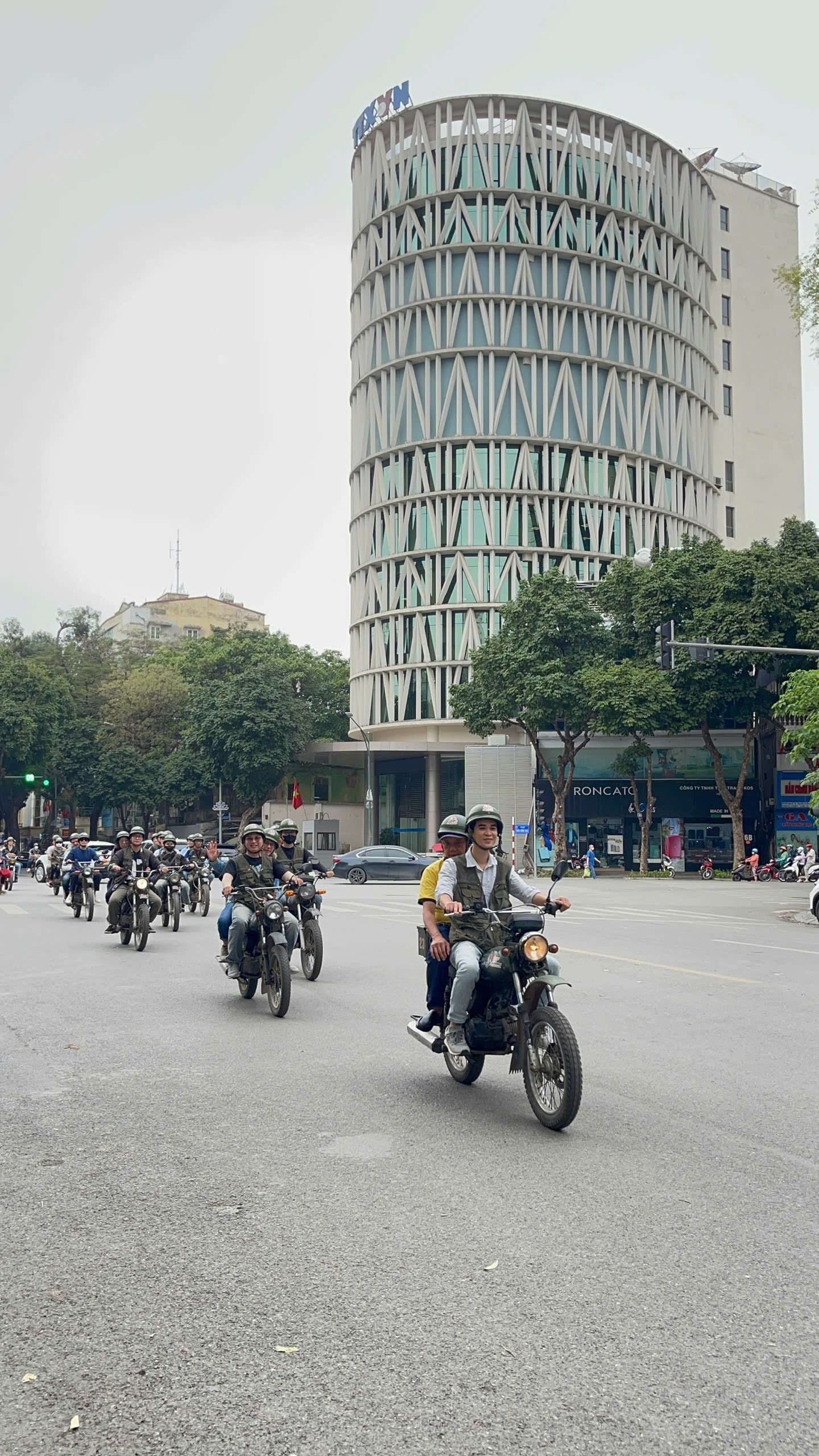
Riding through Hanoi’s hidden backstreets on a vintage Minsk motorcycle feels completely different from looking at the city through a car window. You hear local markets before you see them. You smell charcoal smoke drifting from food stalls tucked inside narrow alleyways. You feel the air change as you cross Long Bien Bridge above the Red River at sunrise.
Vintage Minsk motorbike tours allow you to reach places most tourists never find:
- Hidden railway communities near Train Street
- Quiet neighborhoods beside West Lake
- Red River farming villages beyond the tourist center
- Morning markets where locals actually shop
- Narrow residential alleys where daily life moves slowly despite the modern city growing around them
And because an experienced local driver handles everything — navigation, intersections, traffic rhythm — you are completely free to take in Hanoi itself.
Many travelers later describe their motorbike tour as the highlight of their entire Vietnam journey. Not because of the vehicle, but because of what it showed them.






Explore our Hanoi Motorbike Tours →
Jeep Tours: Hidden Hanoi from a Different Perspective
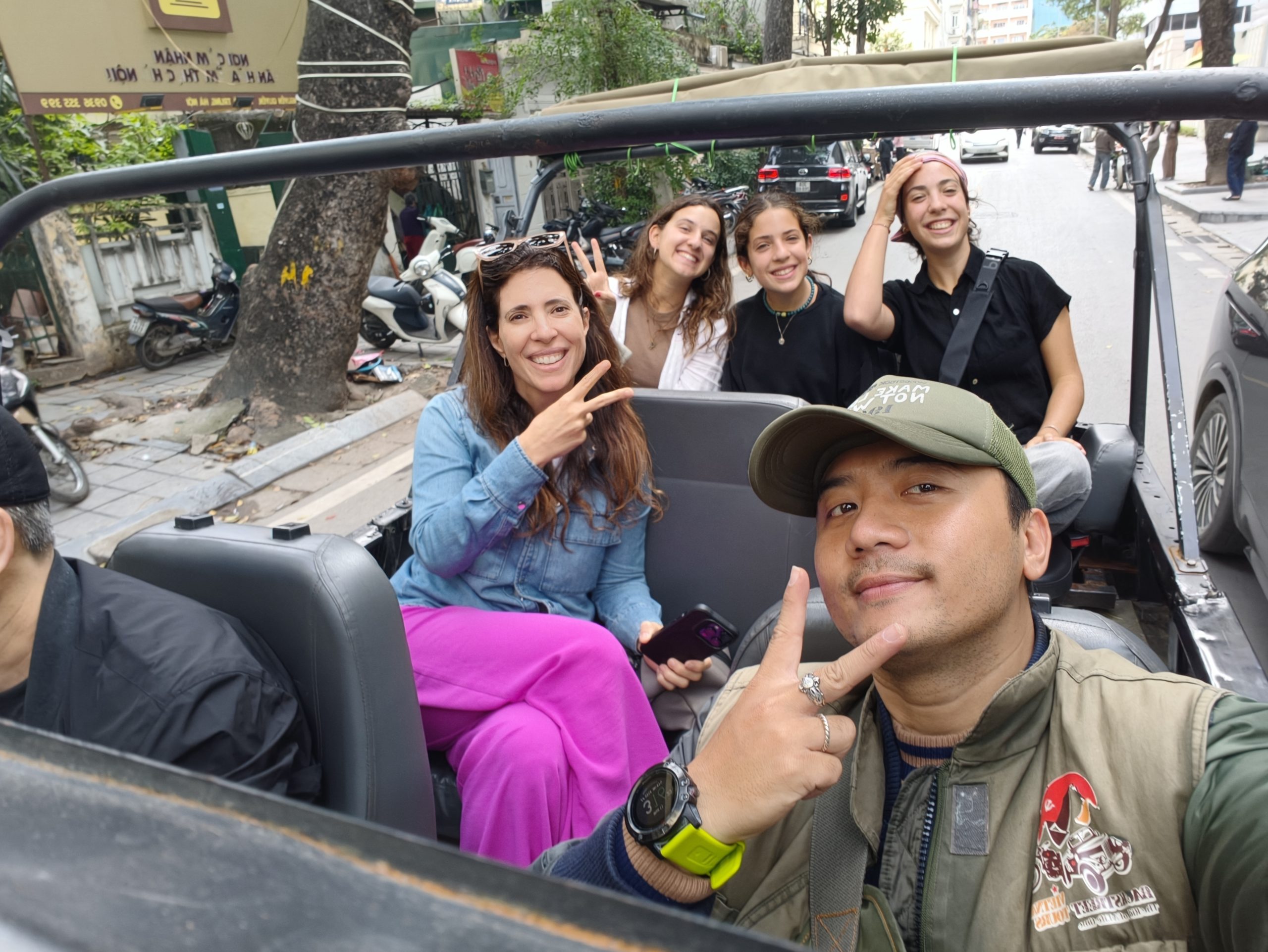
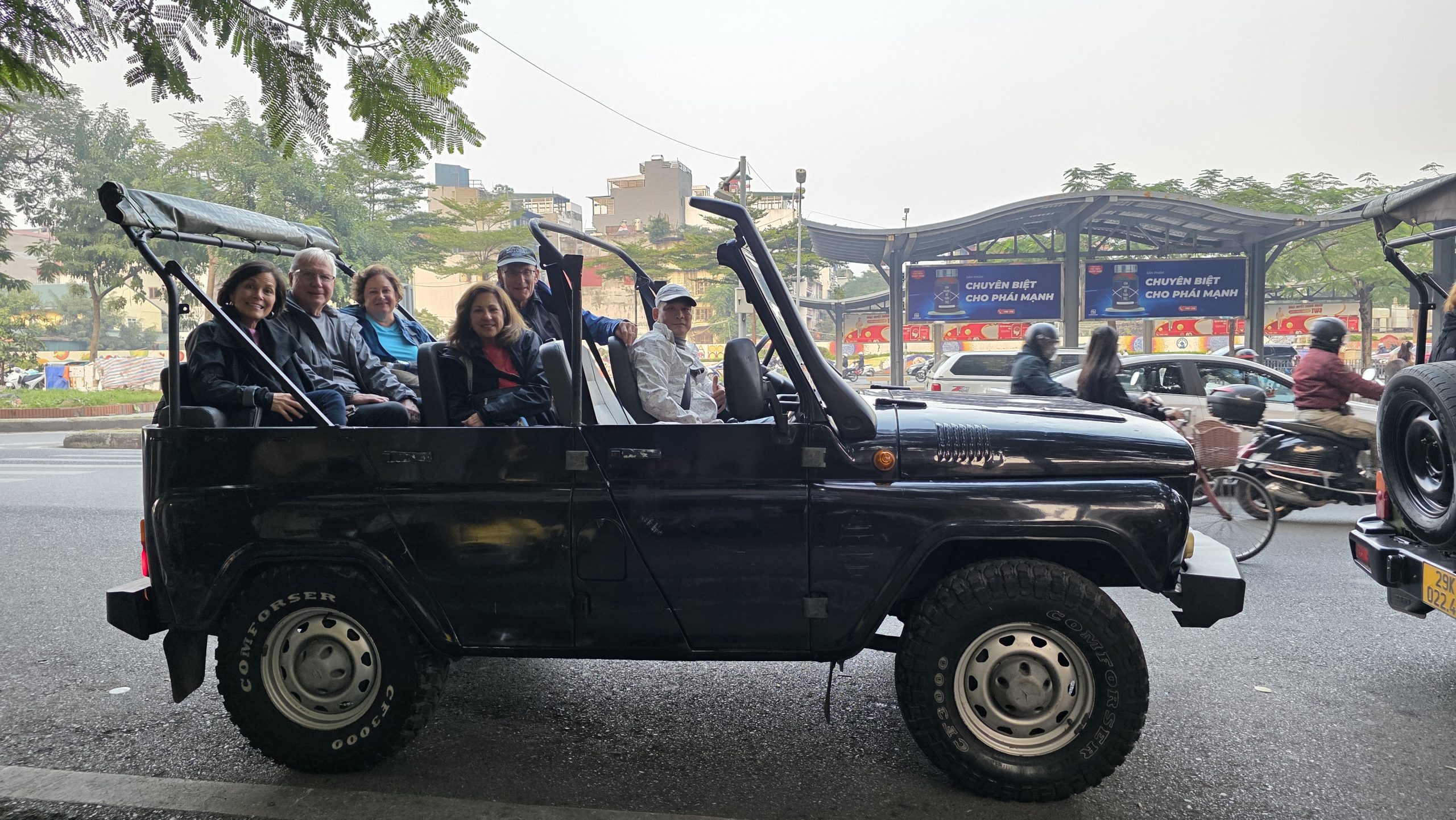
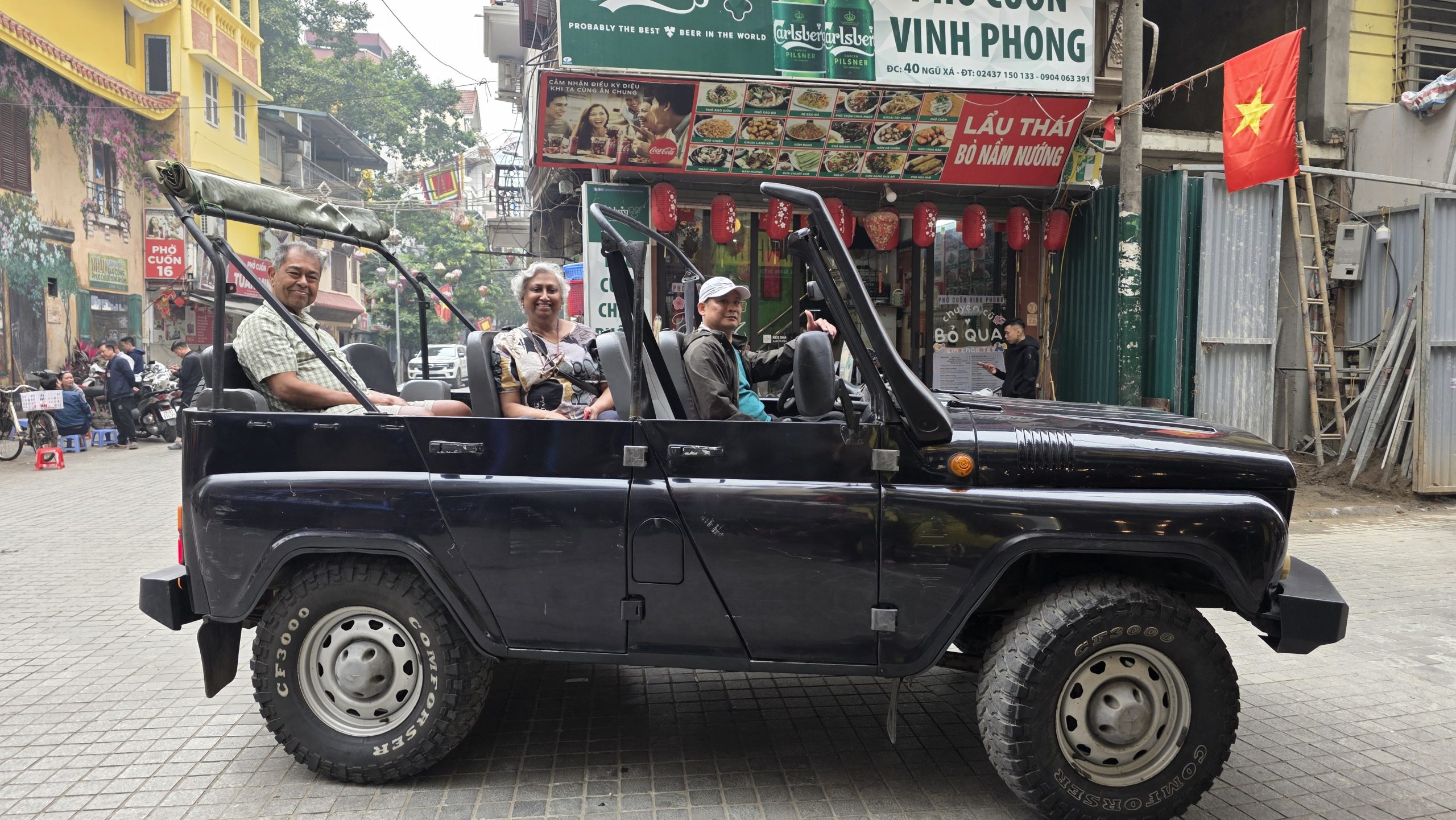
If motorbikes feel like too much for your first day in Hanoi, a vintage army jeep offers something equally special.
Vietnam Backstreet Tours operates original vintage jeeps — the same vehicles that have been part of Hanoi’s streets for decades — giving guests a slightly elevated, more comfortable view of the city while still traveling at street level through hidden neighborhoods and local backstreets.
Jeep tours work particularly well for:
- Travelers who prefer not to ride motorbikes
- Groups or couples wanting to experience Hanoi together
- Half-day and full-day itineraries that cover more distance
- Anyone wanting to combine food stops, cultural visits, and hidden districts in a single experience

Cyclo: A Classic Experience Worth Trying Once
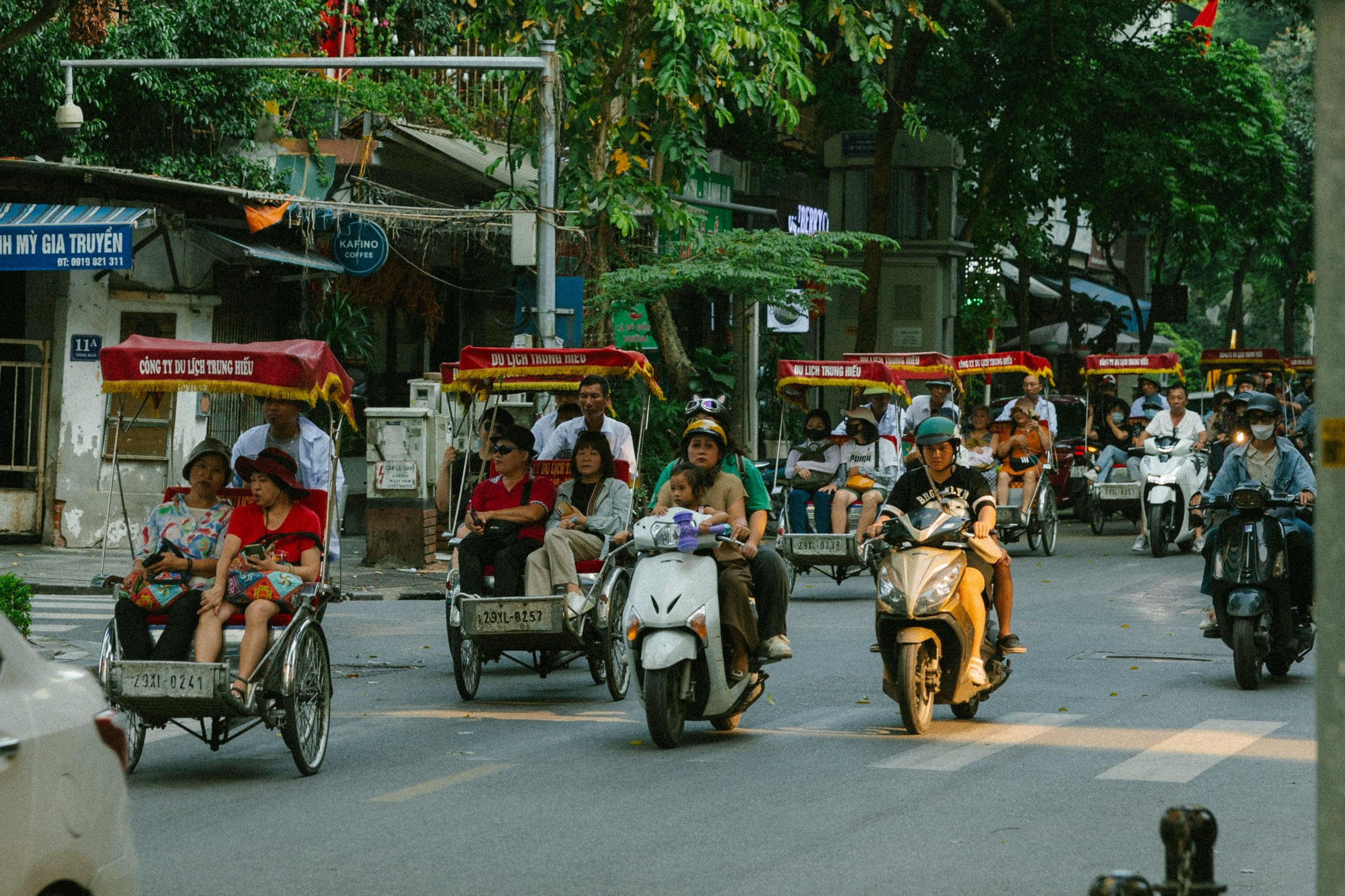
The cyclo — a three-wheeled bicycle rickshaw — has been part of Hanoi’s streets for generations.
Today, cyclos operate primarily around the Old Quarter and Hoan Kiem Lake as tourist experiences rather than practical transport. A standard one-hour cyclo tour through the historic center typically costs around 150,000 VND.
It is a slow, gentle, and genuinely charming way to see the Old Quarter — particularly enjoyable in the early morning when streets are quieter. Most visitors agree it is worth experiencing once.
One practical note: always agree on the price before you get in, as overcharging is common with unregulated operators.
Which Transport is Right for You?
| Situation | Best Option |
|---|---|
| Exploring the Old Quarter | Walking |
| Getting across the city quickly | GrabBike or GrabCar |
| Airport transfer | GrabCar |
| Discovering hidden Hanoi | Motorbike Tour |
| Comfortable city exploration | Jeep Tour |
| Budget travel beyond the Old Quarter | Public Bus |
| A classic local experience | Cyclo (once) |
The Honest Answer

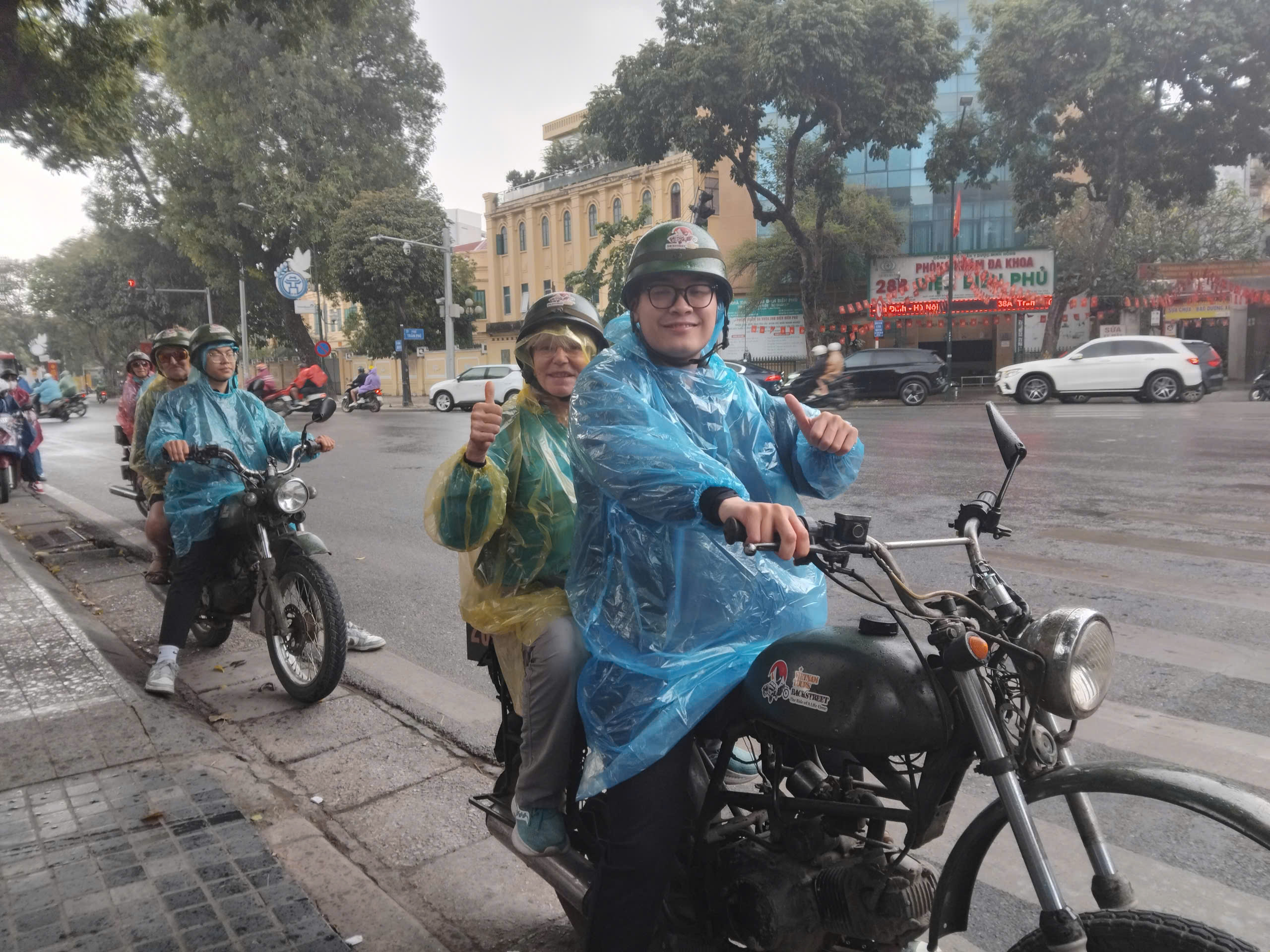
Most visitors to Hanoi end up using a combination: walking for the Old Quarter, Grab for practical crosstown journeys, and — if they are willing — a guided motorbike or jeep tour for the experience that actually stays with them.
Because the truth about Hanoi is this:
The city does not reveal itself to people passing through it quickly, looking at it from a distance, or navigating it with stress. It reveals itself to people who move through it slowly, at street level, with someone who actually knows its rhythm.
That is what a Hanoi backstreet tour offers.
Not just transport — but a genuine connection to the city itself.
Ready to explore Hanoi the way locals know it? See our Tours →
Frequently Asked Questions
What is the easiest way to get around Hanoi for tourists?
For practical crosstown travel, Grab (Vietnam’s ride-hailing app) is the most tourist-friendly option — fixed prices, no language barrier, available 24 hours. For exploring the Old Quarter, walking is usually easier and more enjoyable.
Is it safe to use motorbike taxis in Hanoi?
Booked through the Grab app, GrabBike is generally safe and reliable. Street motorbike taxis (xe om) exist but vary in reliability — using the app gives you transparent pricing and GPS tracking.
Do I need to rent a motorbike to explore Hanoi?
No. Joining a guided motorbike tour as a passenger is a far more enjoyable way to experience Hanoi by motorbike — you get the immersive street-level experience without handling the traffic yourself.
What is the best way to explore Hanoi’s hidden backstreets?
A guided motorbike or jeep tour with local drivers is the best way to discover Hanoi’s hidden neighborhoods, backstreets, and local communities that most tourists never find independently.
How do I download Grab in Vietnam?
Grab is available on iOS and Android in Vietnam. Download it before arrival, register with your phone number, and optionally link a card for cashless payment — though most drivers also accept cash in Vietnamese Dong.



Comments (9)
terong123link,
09 September, 2026This platform has quickly become my daily routine for relaxation after work. The variety of games available is impressive and I love how easy it is to navigate through different categories. Payouts are always processed promptly which shows they really value our time. Sticking with this one for the long haul definitely. terong123link
Briana2528,
09 September, 2026https://addlinks.pro/FgrSo
Karen4618,
09 September, 2026https://addlinks.pro/7EOAn
Reagan4245,
09 September, 2026https://addlinks.pro/4smse
Devon3859,
08 August, 2026https://shorturl.fm/J3FvY
Bennett1019,
07 July, 2026https://shorturl.fm/BqDjQ
Cora1126,
07 July, 2026https://shorturl.fm/f0oZK
Virginia3807,
07 July, 2026https://shorturl.fm/uumK7
Luca4753,
06 June, 2026https://shorturl.fm/eLhmg